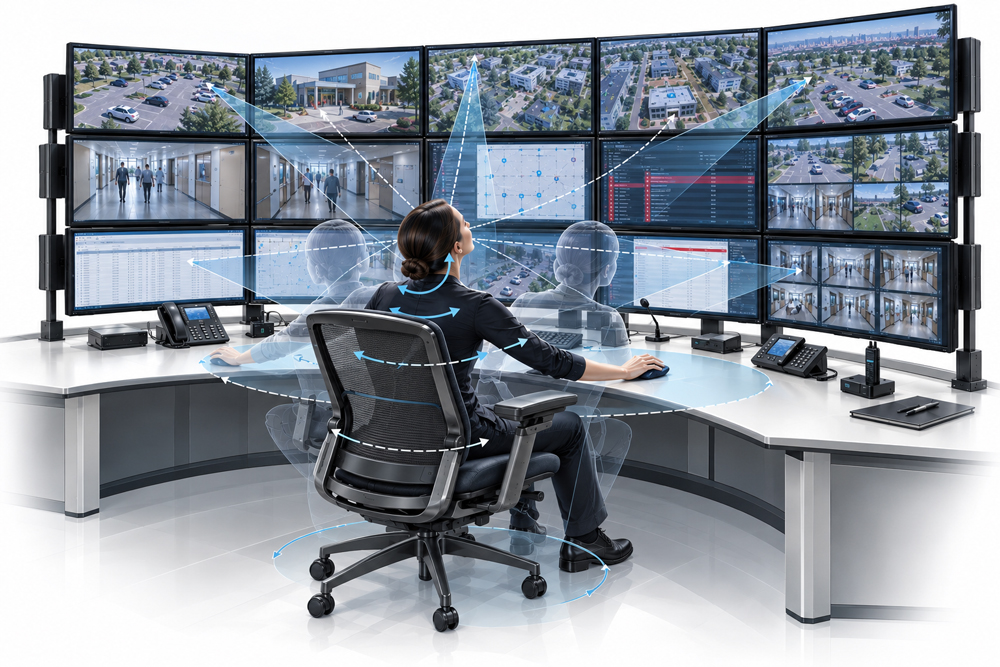
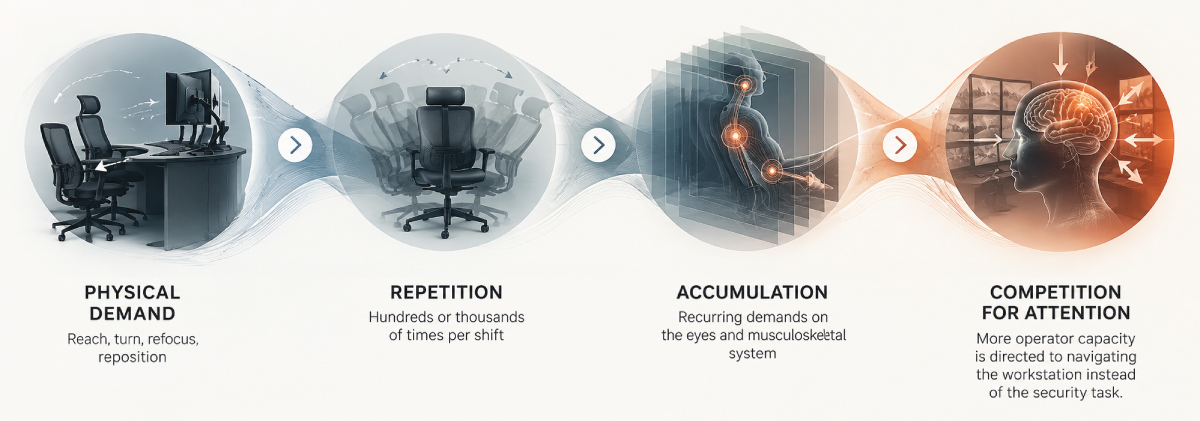
Physical strain in the control room rarely results from a single movement. More often, it develops through the accumulation of small, repeated physical compensations such as leaning forward to view a distant display, rotating the head and neck toward information outside the effective visual field, reaching beyond a comfortable range for frequently used equipment, maintaining prolonged static postures, or repeatedly repositioning the body to accommodate the workstation.
Each movement may seem inconsequential on its own. Across thousands of interactions and extended hours of operation, however, these small compensations can create recurring demands on the eyes and musculoskeletal system, particularly the neck, shoulders, back, and arms.
OSHA's workstation guidance reinforces this principle: prolonged head and neck rotation can increase muscular fatigue, excessive monitor distance can encourage forward leaning, and poorly positioned equipment can create repeated reaching and other awkward postures1.