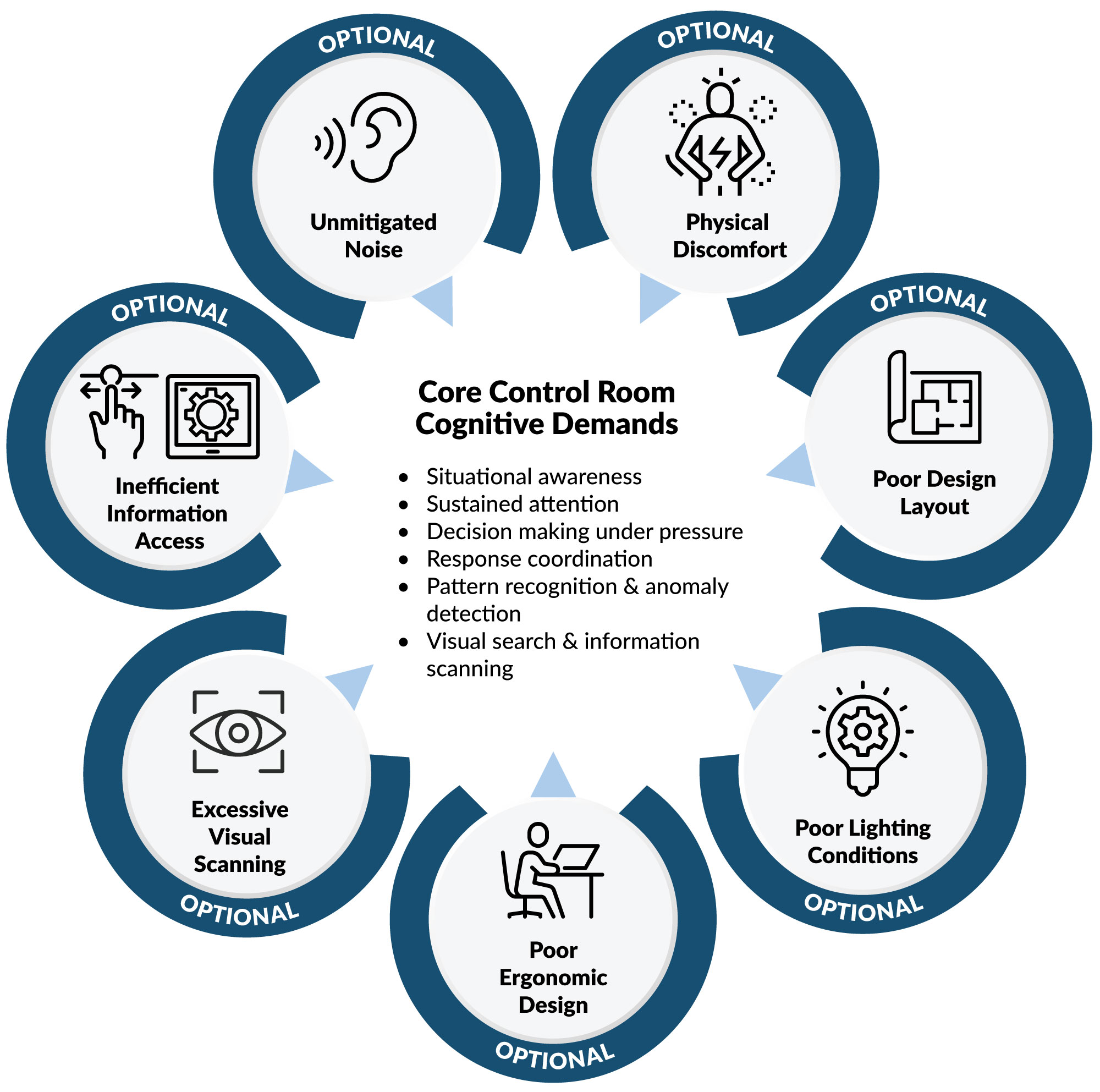
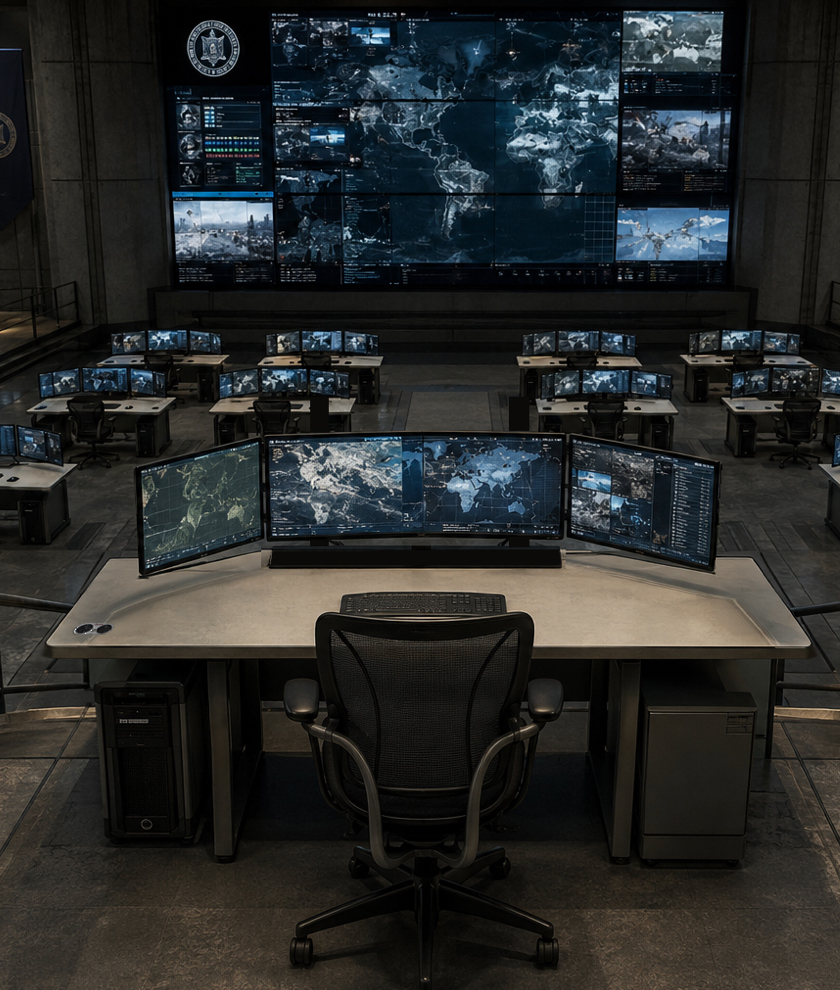
Control room operations inherently demand sustained attention, situational awareness, visual search, pattern recognition, decision making, and coordinated response. These are essential cognitive demands of the work. The physical environment should not add unnecessary demands of its own.
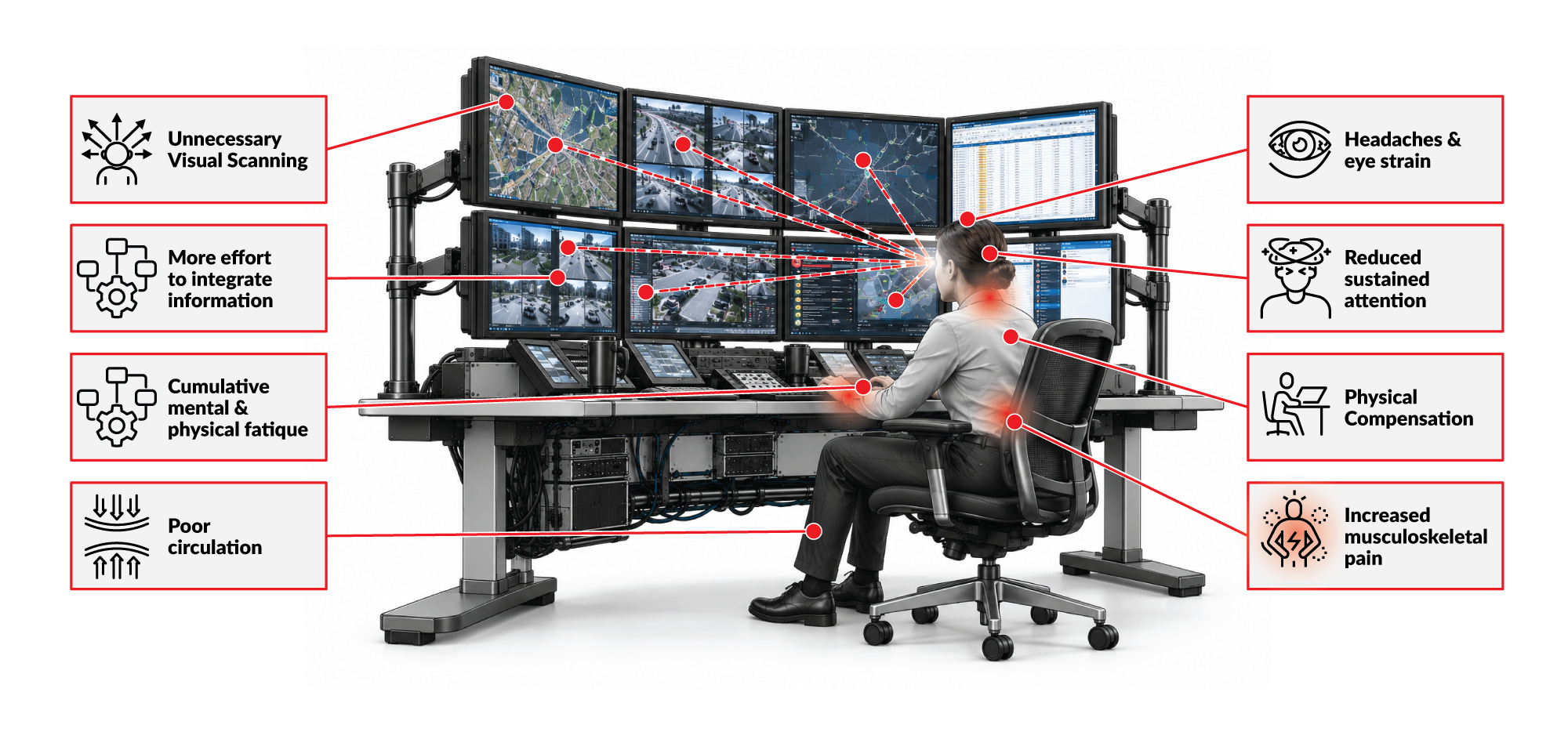
When critical information is distributed across poorly positioned displays, equipment is difficult to access, or the operator must repeatedly scan, refocus, reach, or reposition to interact with the technology, attention is divided between the security task and the effort required to navigate an environment that lacks proper ergonomic support. Individually, these demands may appear minor. Across an extended shift, however, they can consume cognitive resources that should remain focused on monitoring, interpretation, and response.