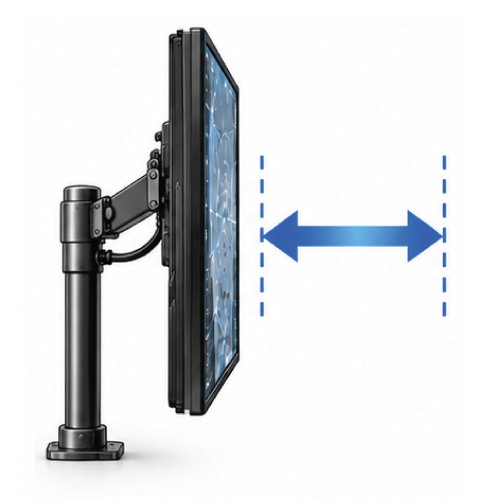
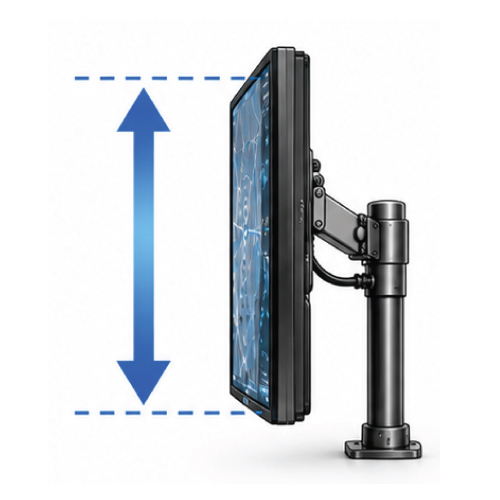
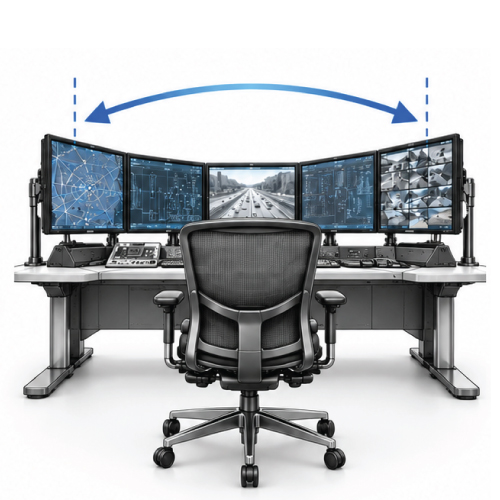
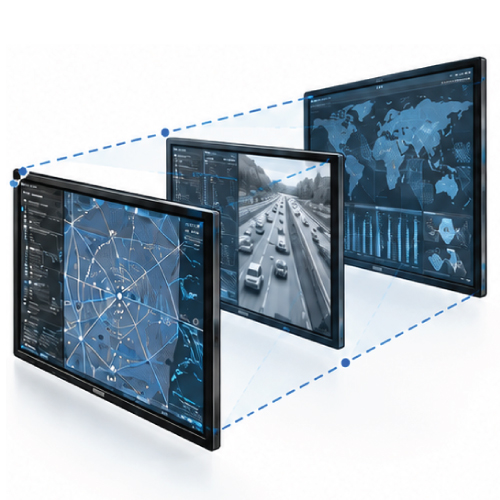
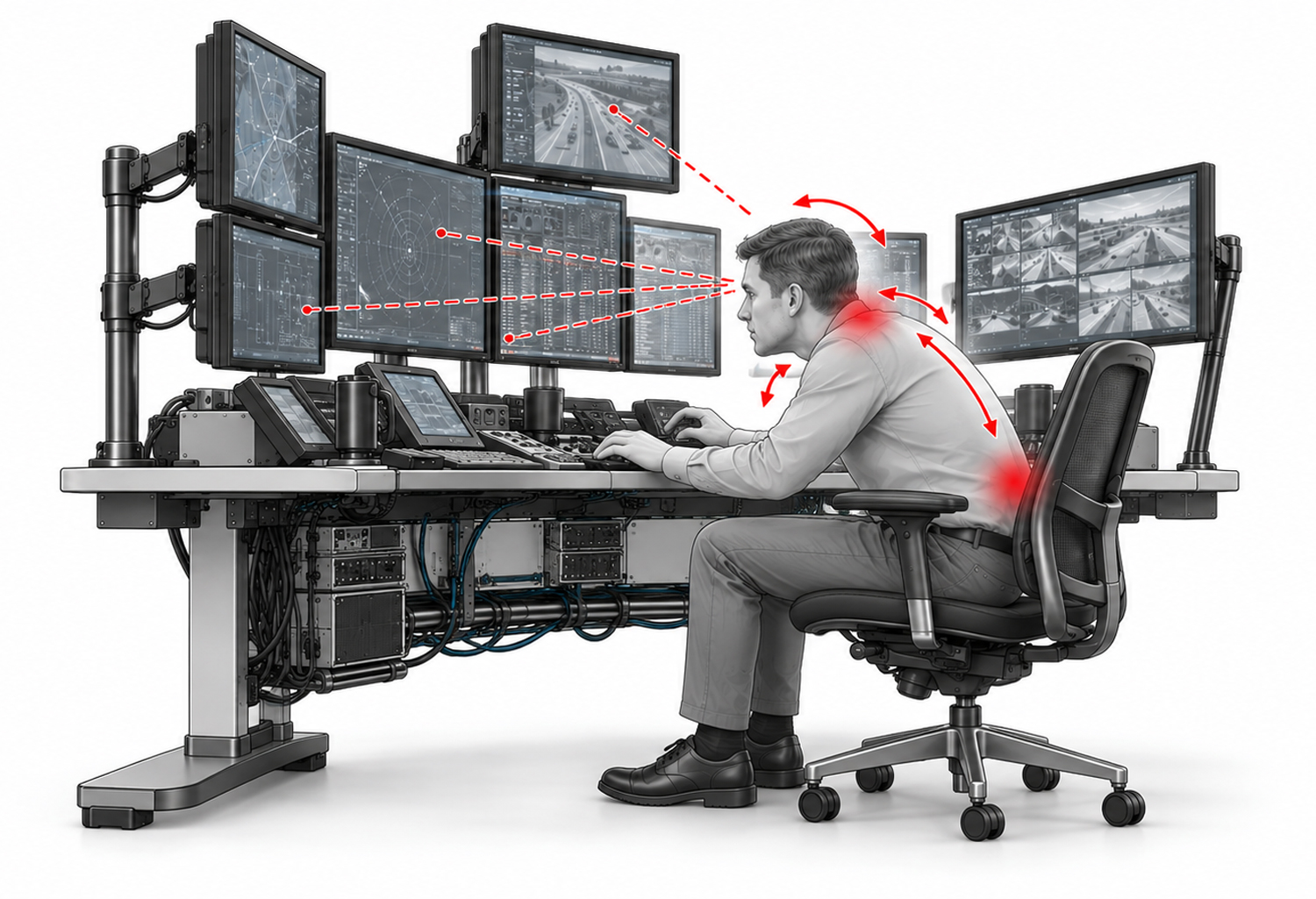
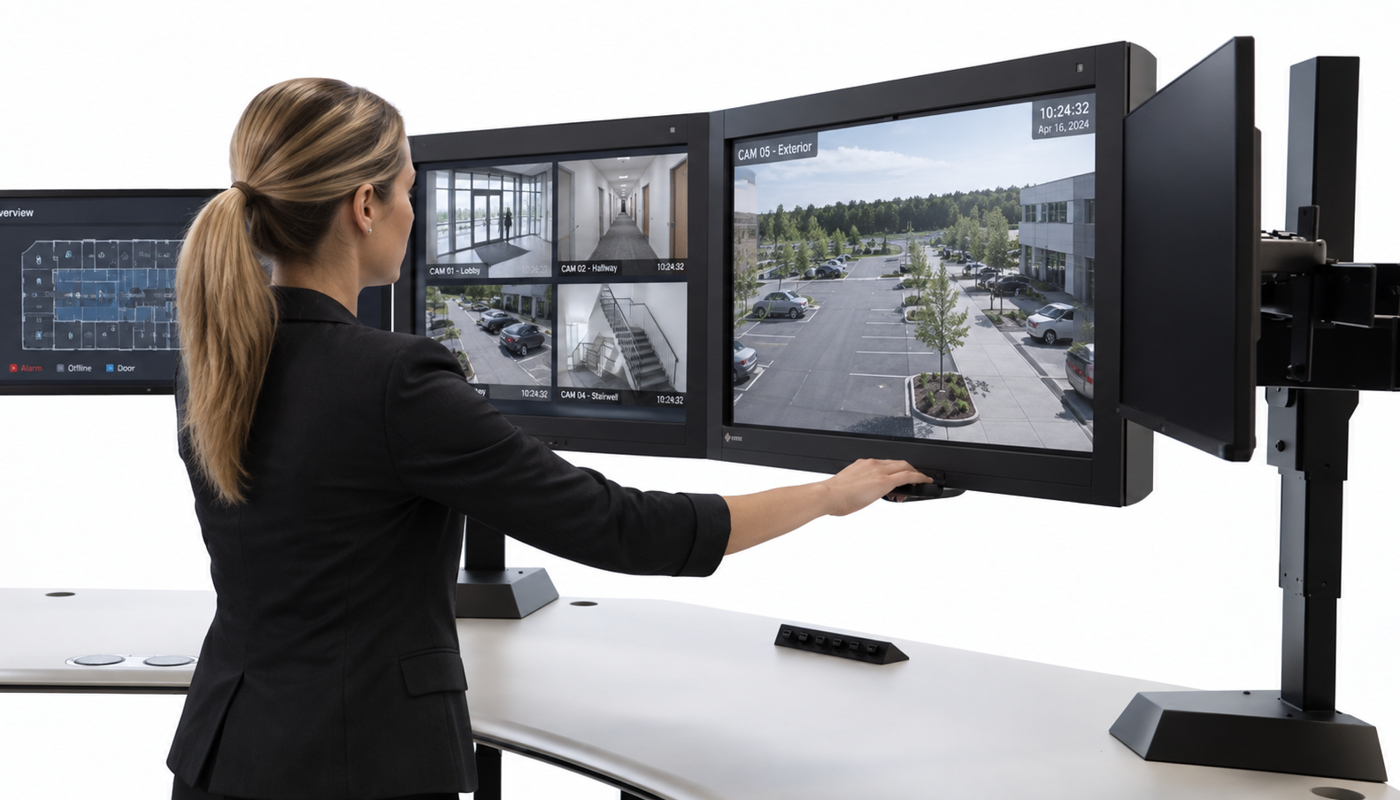
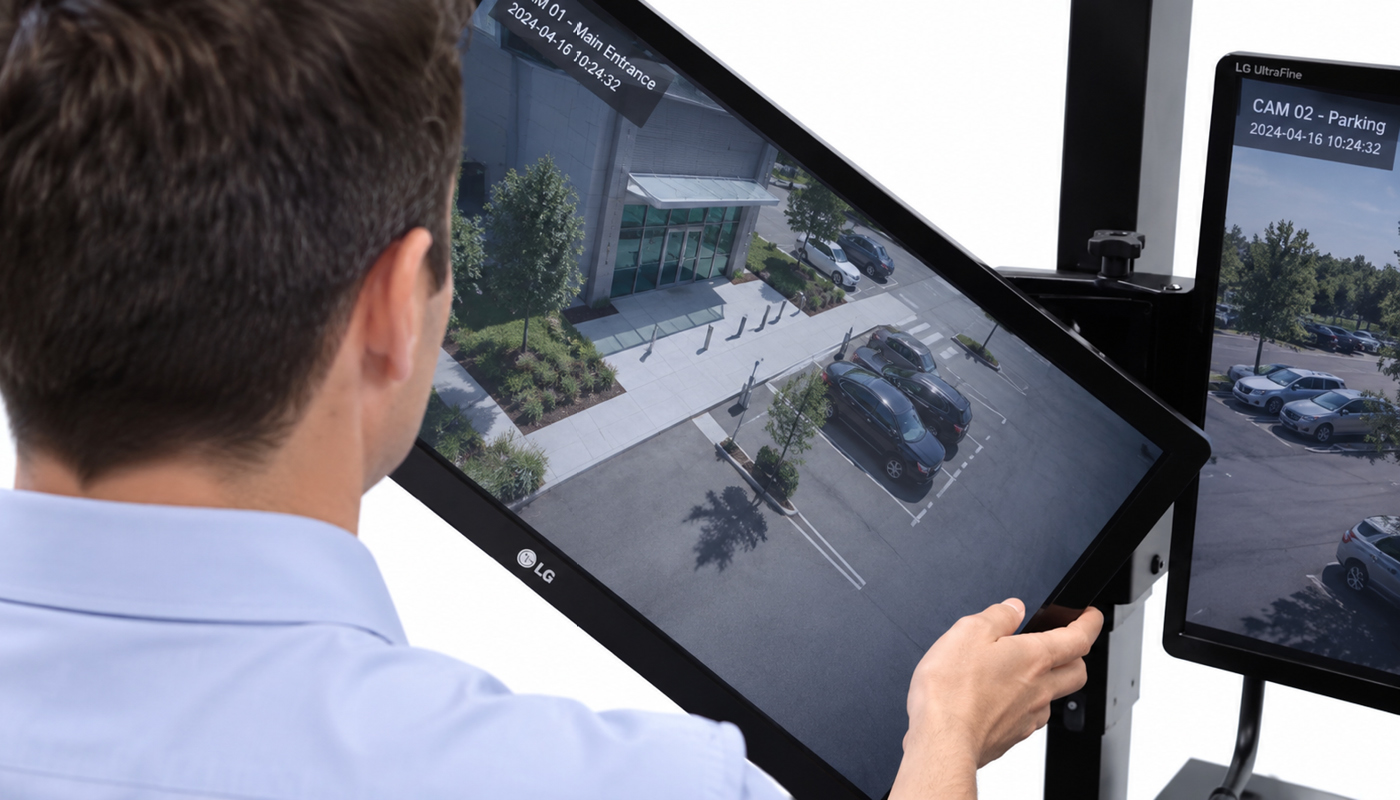
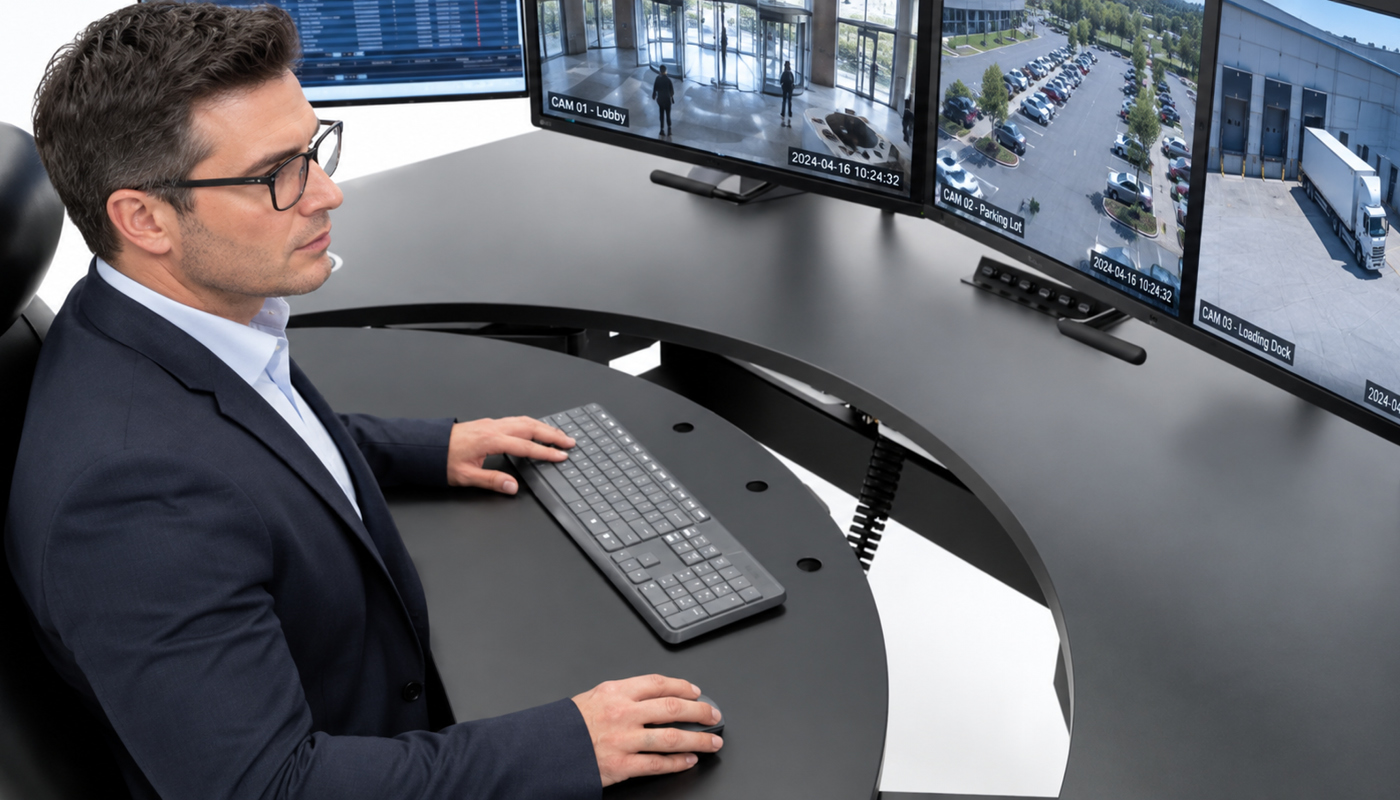
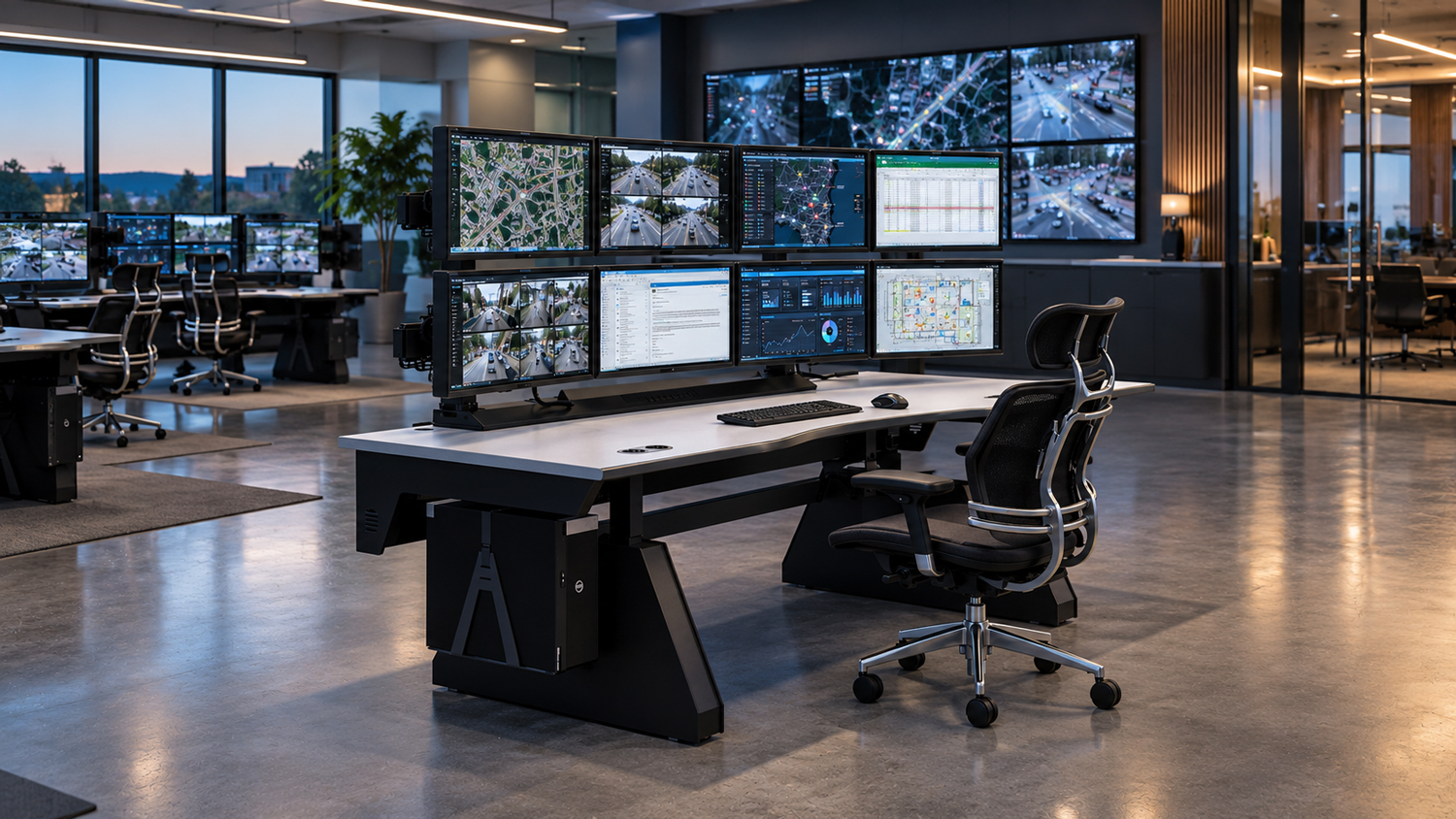
Control room operators rarely interact with a single display. They monitor information distributed across monitors of different sizes, functions, priorities, and placement. The quality of that visual environment depends not only on whether each monitor can be seen, but on how naturally the entire array can be viewed and interpreted.
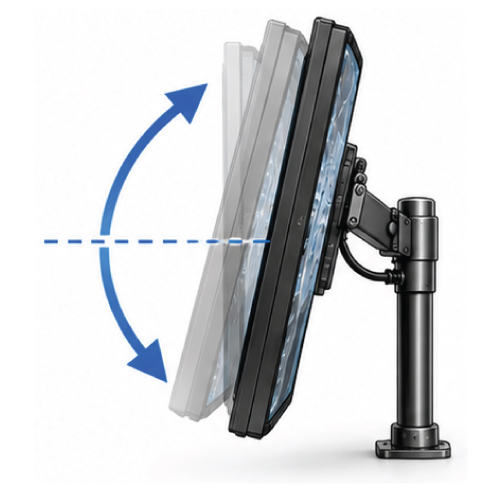
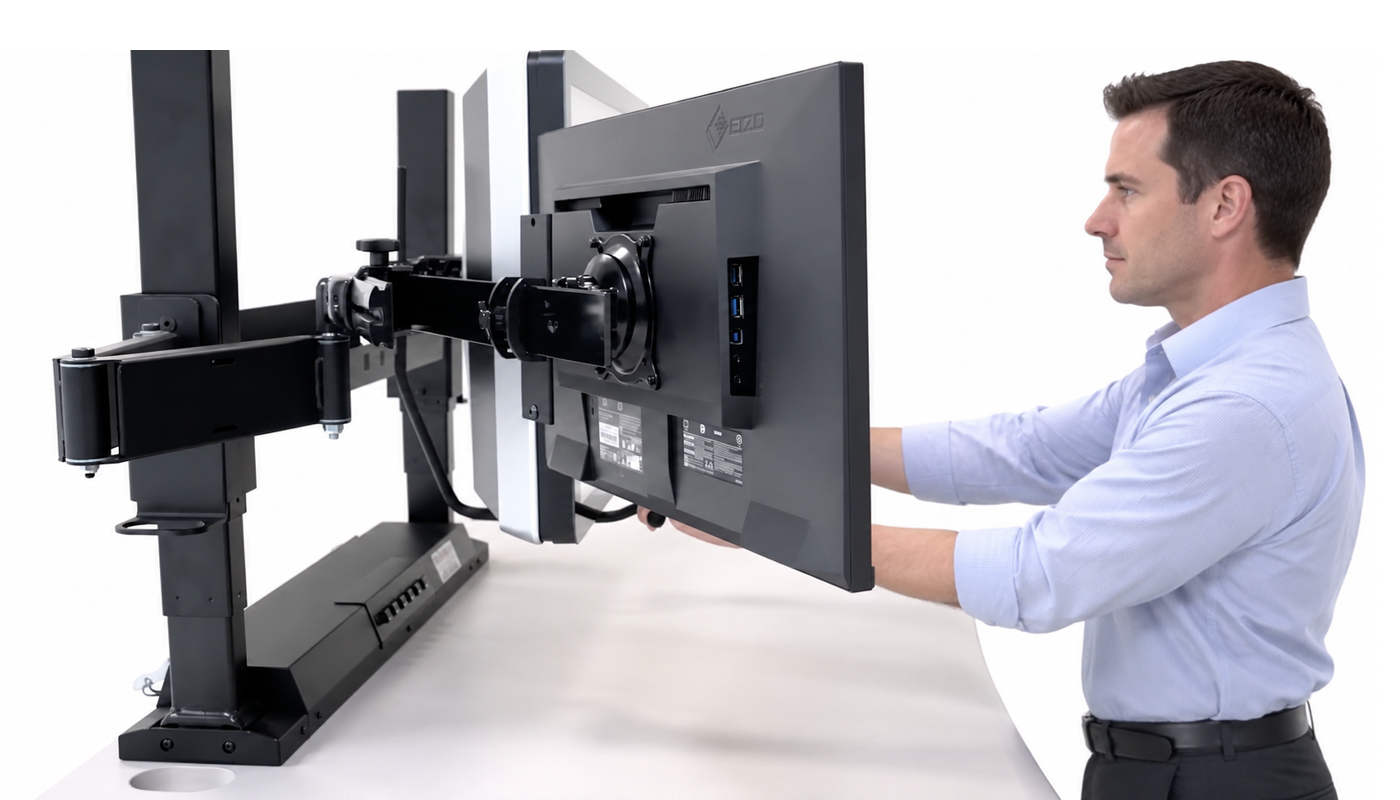
Focal depth, monitor height, viewing distance, screen angle, visual field, and console geometry work together to determine how naturally and effectively information is presented to the operator. When these relationships are poorly resolved, the operator may compensate through forward leaning, repeated neck rotation, excessive eye movement, or continual postural adjustment. The physical effort may be subtle, but its effects accumulate throughout extended shifts.