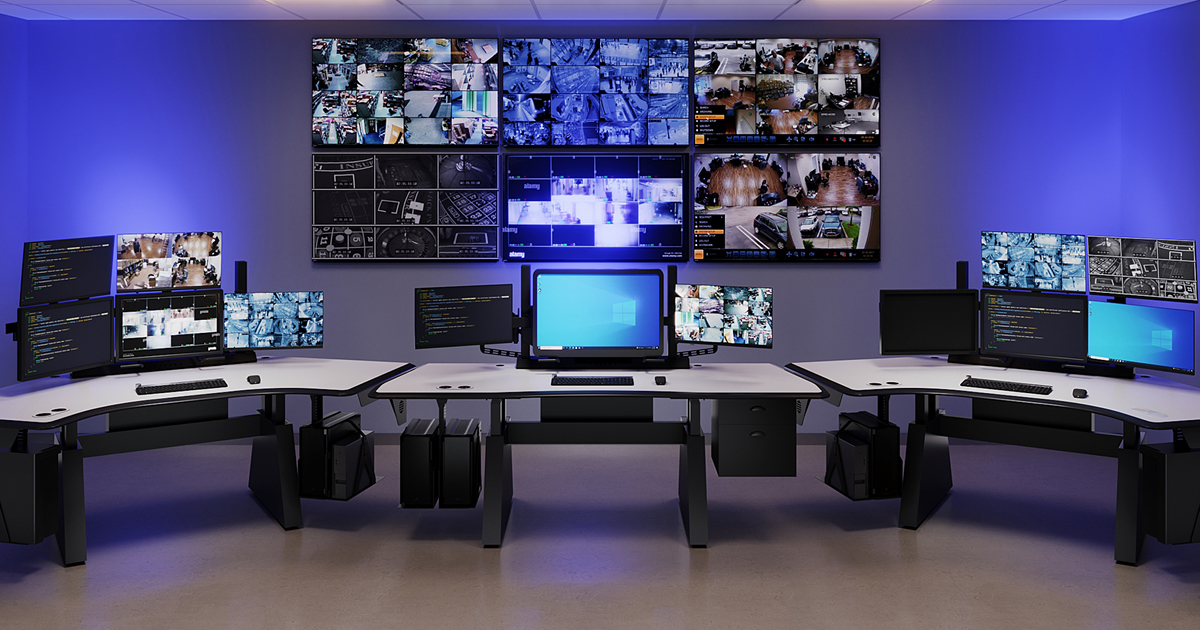
Control room performance is shaped not only by technology and operator skill, but also by the environment that supports them. Long hours of constant vigilance and rapid decision making mean even small discomforts or inefficient layouts can quietly erode focus, increase fatigue, and raise the risk of error.
Research consistently demonstrates that ergonomic workplace design significantly improves both human performance and operational outcomes. Studies of ergonomic console redesign have shown productivity increases of approximately 25 percent and substantial reductions in error rates when consoles are designed according to ergonomic principles.1
Peer-reviewed occupational health research has also demonstrated that ergonomic workstation adjustments and training programs significantly reduce musculoskeletal symptoms in the neck, shoulders, and upper limbs, factors closely associated with fatigue and reduced cognitive endurance in prolonged computer-based tasks.2
These findings reinforce the role of applied ergonomic engineering as a critical component of performance infrastructure in high-attention operational environments. Properly engineered ergonomic consoles (not simply sit/stand desks) enhance operator well-being, strengthen cognitive endurance, and support stronger operational outcomes. Reduced physical and mental strain enables operators to remain attentive, make faster decisions, and sustain high levels of accuracy throughout extended operational cycles.
These realities underscore the need for control room consoles to be engineered as integrated performance interfaces that support operator postural stability, visual precision, cognitive endurance, and sustained attentiveness across every shift.
When engineered with sound ergonomic principles, the console becomes a performance asset.
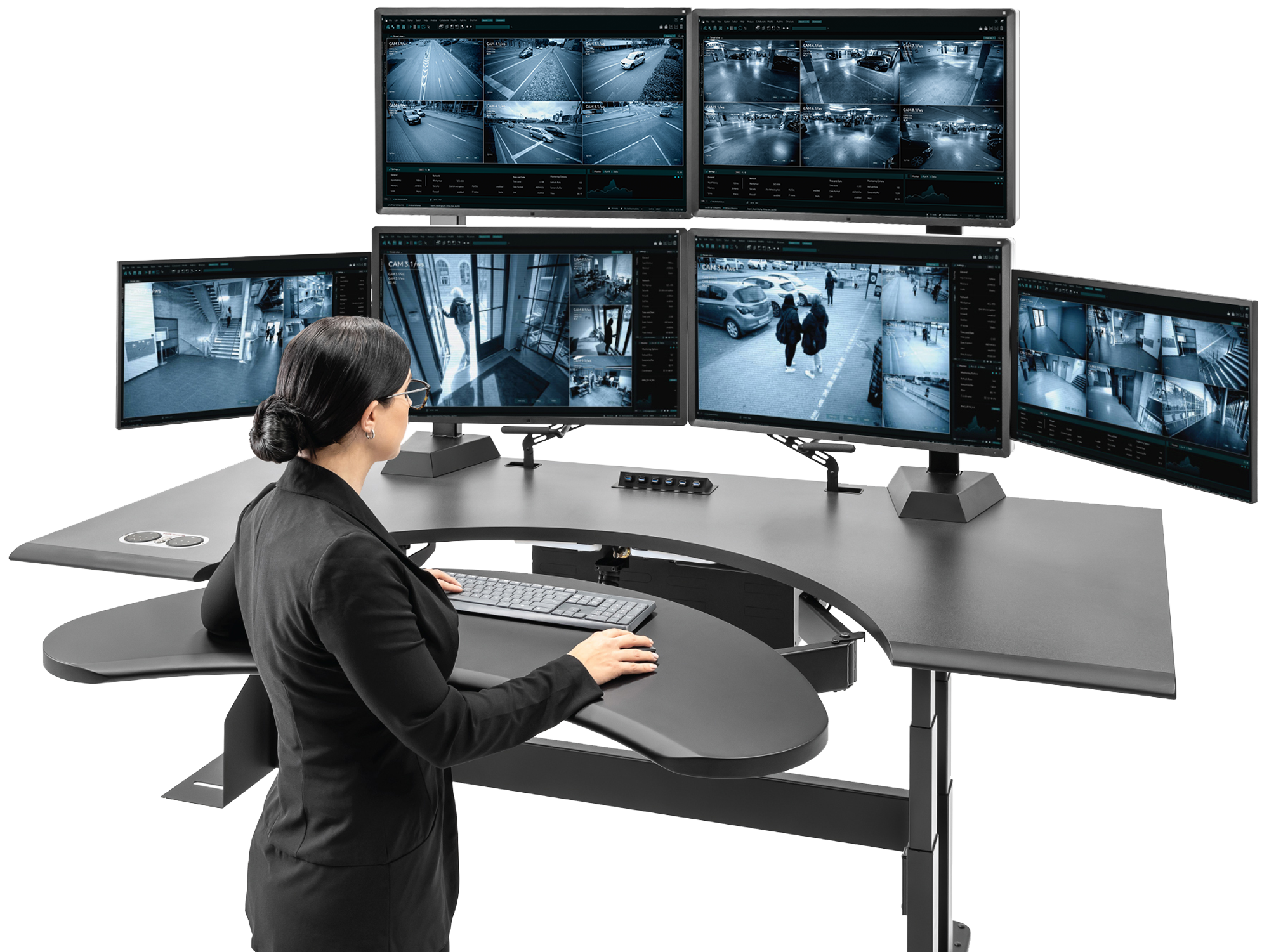
Designed in accordance with sound ergonomic principles, the Evolve console is intentionally structured to enhance focus, efficiency, and sustained operational output including:
Console’s frame and load-bearing design
Integrated monitor mounting system
Geometry of the work surface
Ergonomic alignment between the operator, monitors, and primary reach zones
Movement and adjustment capabilities of key components
Each component, from monitor mounting to surface geometry, is deliberately integrated into a unified system engineered to meet the physiological and technical demands of continuous operations while systematically mitigating individual ergonomic stressors at the operator level.
The following analysis examines how the Evolve ergonomic console redefines the control room console as a true performance interface through thoughtful design, structural integrity, and purposeful ergonomics.
1) The ComfortView™ Monitor Mounting system: Integrated, not attached
Conventional mounting solutions treat displays as add-ons to a simple sit/stand desk. ComfortView, however, integrates them into the console’s structural framework creating an architectural backbone that can support large, heavy displays arranged in tiered or layered configurations.
Engineered Performance Capabilities
Precision sightline control designed to support neutral cervical posture and reduce cumulative neck and visual strain.
Structural integrity at scale, securely supporting large-format and dual diagnostic displays without sagging, drift, or loss of alignment over time.
True multi-axis adjustability: height, depth, tilt, and profile, allowing seamless refinement without interrupting workflow.
Full-surface horizontal and vertical mobility, enabling the entire monitor array to glide freely across the desktop for exact ergonomic positioning; a unique and essential capability.
Intuitive touch-sensitive vertical adjustment paired with unrestricted horizontal movement, delivering dual-axis freedom beyond conventional fixed-path systems.
Tool-free adaptability, allowing rapid, confident personalized adjustments as operational demands evolve.
Optimized, individualized, and precise ergonomic alignment reduces fatigue, eye strain, and musculoskeletal stress during extended monitoring.
Fluid workflow responsiveness supports immediate and intuitive repositioning without task disruption.
Unobstructed workspace integration preserves full access to keyboards, controls, and documentation while maintaining precise display positioning.
The result is not simply better display positioning but rather maximized situational awareness while keeping musculoskeletal fatigue at bay during extended operational periods.
Watch the ComfortView Monitor Mounting System in Action
2) Signature Series: Customization as an engineering standard
Consistent with all Evolve ergonomic consoles, the Signature Series builds upon the ComfortView foundation through a fully customized architectural framework designed to support precise ergonomic performance and operational demands.
Customization is embedded in the development process, and it is not a supplemental upgrade.
Work Surface Architecture Aligned to Operational Demands
Each Evolve console is individually configured in response to spatial parameters and workflow requirements, with deliberate attention to the nuanced interaction patterns and ergonomic needs of each operator.
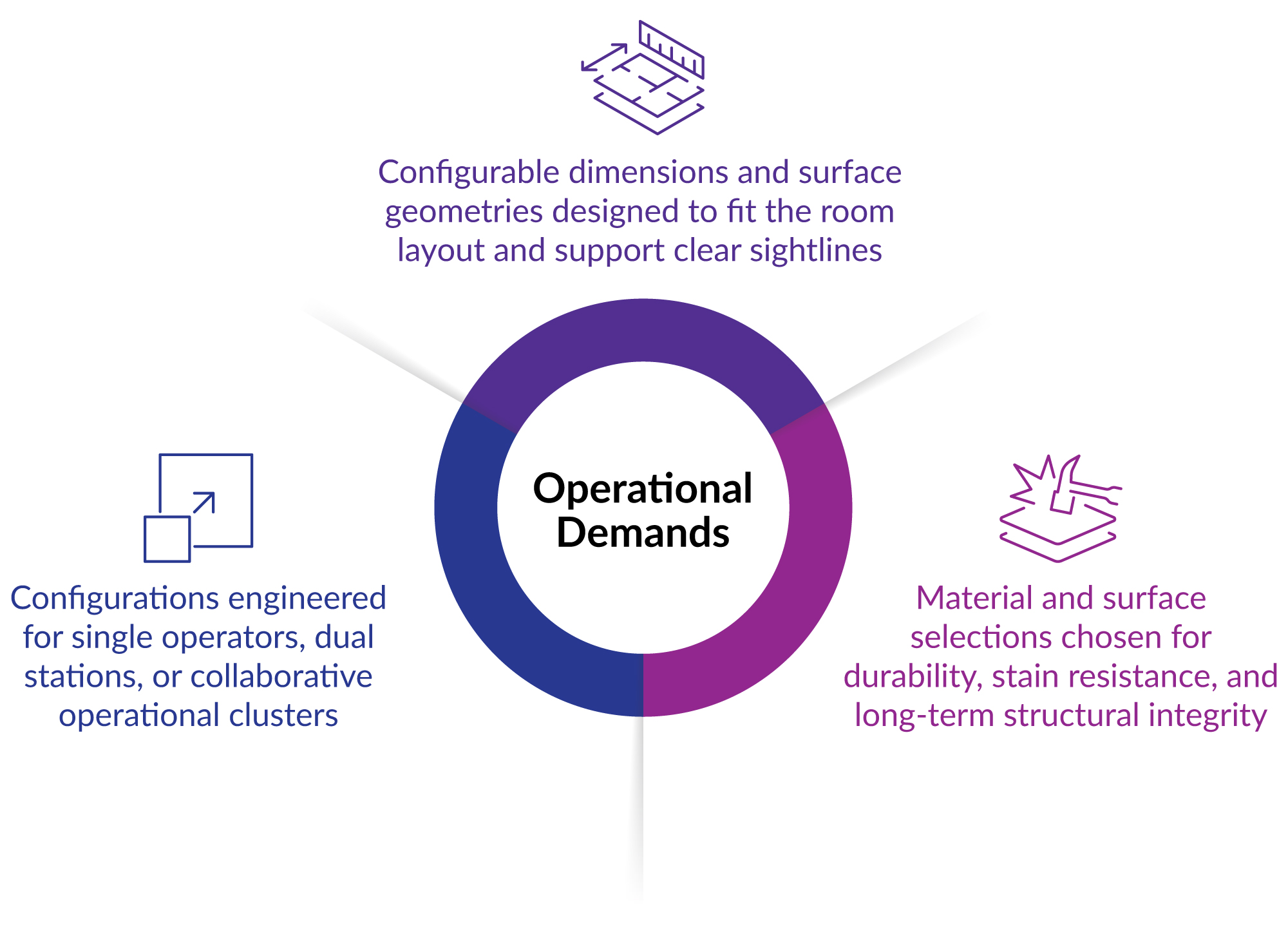
Importantly, customization extends beyond aesthetics. Surface depth, curvature, and monitor-to-operator distance are calibrated to reduce forward reach, minimize shoulder elevation, and preserve neutral wrist positioning.
The objective is preventive: to eliminate ergonomic stressors at the design stage rather than manage their consequences later.
3) Glide™ Series: Dynamic surface responsiveness
Fully customizable to fit individual needs, the Glide's revolutionary floating work surface responds effortlessly to subtle natural shifts in posture, enhancing comfort without interrupting focus or workflow. The Glide Series introduces controlled dynamic responsiveness through proprietary floating work surface technology.
The work surface as an active ergononmic component
The Glide Series redefines the operator work surface as an active ergonomic component engineered to adapt to each individual and move with the body, transforming the desk from a static platform into a responsive performance component.
At the core of the design is a dynamic work plane that subtly responds to natural posture shifts and micro-movements. As an operator shifts weight, reaches for tools, or pivots to view another monitor, the floating surface responds with controlled, fluid movement to relieve accumulated muscular tension without disrupting focus or workflow.
This dynamic responsiveness helps maintain a neutral alignment of the spine, shoulders, and arms, helping reduce the strain associated with prolonged static posture. Instead of forcing the body to adapt to the console, the Glide Series allows the console to adapt to the body, promoting comfort, endurance, and sustained performance throughout extended shifts.
What it allows for and why this matters
Seamless integration with your workflow: The floating surface supports cognitive focus, offering movement only when the operator naturally initiates it. This minimizes disruptions while maintaining comfort and efficiency.
Responsive and intuitive: The Glide responds to large and subtle shifts in movement so operators don’t have to think about adjusting their setup manually. Instead, the console works intuitively with them.
Custom-tailored ergonomics: Since every operator’s posture and reach range is unique, the Glide can be configured to fit individual body mechanics, workflow patterns, and preferred setup on-the-fly to further enhance customization.
Watch the ComfortView Glide in Action
4) Integrated Ambient and Task Lighting: Console-level visual optimization
Lighting directly affects visual acuity, cognitive endurance, and circadian rhythm regulation. Rather than relying solely on overhead lighting, Evolve consoles incorporate integrated ambient backlighting within the monitor mounting structure itself.
What it allows for and why this matters
Individually controlled illumination reduces glare and high-contrast visual strain.
Backlighting supports sharper edge definition and clearer separation of on screen elements, improving visual clarity in low light environments.
Tunable lighting profiles can be calibrated to support an individual's alertness across rotating or extended shifts.
The result is a display environment that maintains visual clarity and sharp edge definition, helping operators interpret dense on screen information quickly and sustain focus during extended monitoring sessions.
5) Integrated Infrastructure: Operational efficiency through structural integration
Operational continuity depends on efficient infrastructure management. The Evolve console integrates functional systems directly into the workstation design.
What it allows for and why this matters
Embedded power and data connectivity positioned within optimized ergonomic reach zones.
Structured cable management systems that reduce obstruction and eliminate trip hazards.
Dedicated storage solutions that preserves a clean surface order while maintaining accessibility.
Optional ergonomic enhancements including standing supports, footrests, CPU mounts, and wireless charging integration.
These systems prevent incremental clutter and spatial encroachment which are common contributors to compromised ergonomic alignment over time.
6) Engineered Surface Finishes: Durability, hygiene, and environmental cohesion
Performance environments demand materials capable of withstanding continuous use. Evolve consoles offer high-quality engineered finishes ranging from refined professional neutrals to distinctive options such as Shadow Zephyr, Quartz Frost, and Multi-Color Marble-Effect.
Material selection prioritizes:
Long-term structural stability under 24/7 operational conditions
The result is a console that maintains functional integrity and visual consistency in high-traffic environments.
Conclusion: The operator’s primary interface, engineered as an integrated system
The Evolve Ergo Control Room embodies a hollistic-based philosophy of infrastructure, where every element is purposefully unified to advance operator performance. The console monitor mount and controls, surface architecture, integrated lighting, and design layout are not treated as independent features, but as interdependent components within a cohesive ergonomic framework designed to function as a single, performance-driven environment.
At the core of this architecture is the ComfortView Monitor Mounting System, providing precise display mobility, structural alignment, and visual consistency across complex array configurations. These capabilities are complemented by a fully customizable, durable platform that is ergonomically designed to support sustained attention, physical stability, and cognitive endurance during prolonged and high-demand operational shifts.
In mission-critical environments, performance reliability is not limited to software and hardware alone. It also depends on the physical interface through which operators interpret, analyze, and act on information. The Evolve ergonomic console is engineered as that interface system, intentionally engineered to reduce ergonomic stressors, stabilize the visual and physical environment, and enable sustained human performance over long periods of time.
1. Donkin, Richard. An Argument for Ergonomic Workstations: Increased Productivity. Reprinted from The RSI Network, Issue 17, April 1994. Data summarized from: Dainoff, M. J., & Dainoff, M. H. (1986). Experimental comparison of ergonomically designed and non-ergonomic visual display terminal workstations demonstrating approximately 25% higher performance levels in ergonomically designed environments. Additional data reported in: Pheasant, Stephen. Ergonomics, Work and Health. London: Macmillan Press, 1991.
2. Ağar, Ali; Yeginoğlu, Gülay; Kızıltan, Belkız. The Effect of Ergonomics Training Given to Office Workers on Musculoskeletal Disorders and Working Postures. International Journal of Occupational Safety and Ergonomics, Vol. 31, Issue 2, 2025. Randomized controlled study demonstrating significant reductions in neck, shoulder, upper limb, and lower back musculoskeletal disorders following ergonomic workstation training and adjustment programs.