How integrating cognitive workload optimization into control room design increases accuracy, resilience, and long term effectiveness
Control Rooms are built to protect critical assets, infrastructure, and people. Inside these environments, operators must sustain vigilance, interpret complex data streams, and make high-consequence decisions under intense pressure. As threat landscapes evolve and systems grow more interconnected, the cognitive demands placed on security teams continue to intensify.
Physical ergonomics has rightly become a standard consideration in modern control room design. However, the mental work required of SOC operators (how information is perceived, prioritized, and acted upon) has often been addressed indirectly rather than intentionally. Cognitive ergonomics brings this factor into focus. It is a design discipline grounded in human performance science, and it plays a decisive role in operational accuracy, resilience, and long-term effectiveness.
Cognitive ergonomics is not an abstract concept. It is a design discipline that directly shapes operational performance.
Cognitive Load as a Performance Variable
Cognitive load refers to the mental effort required to process information and make decisions. In SOC environments, cognitive load escalates when operators must extend extra effort to search for critical data, are preoccupied with physical discomfort, or need to mentally compensate for fragmented displays and inefficient workflows. Over time, this strain degrades situational awareness, slows response, and increases the risk of error.
Importantly, cognitive overload rarely presents as a single failure event. More often, it appears as decision fatigue, uneven performance across shifts, and diminished vigilance during extended monitoring. Although it is well noted that mental stress is inherent in a control room, cognitive overload is optional. These optional factors include the additional, unnecessary load imposed by environments that force operators to compensate for visual strain, noise, physical discomfort, or poor spatial organization. Control Room design plays a direct and measurable role in either amplifying or reducing this burden.
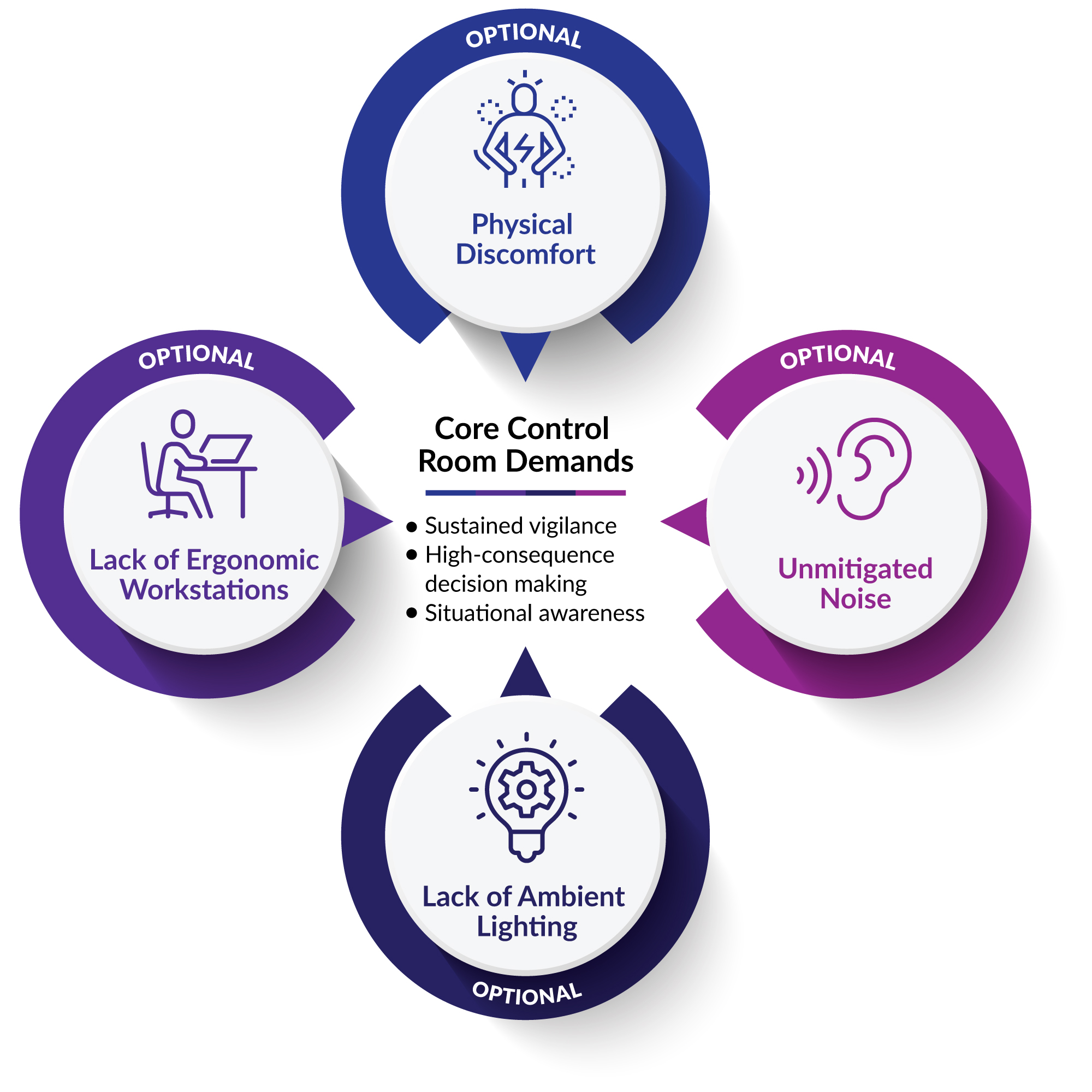
Designing SOCs to actively manage cognitive load is therefore fundamental to operational reliability, not merely operator comfort.
The Ergonomically Designed Console as the Cognitive Anchor
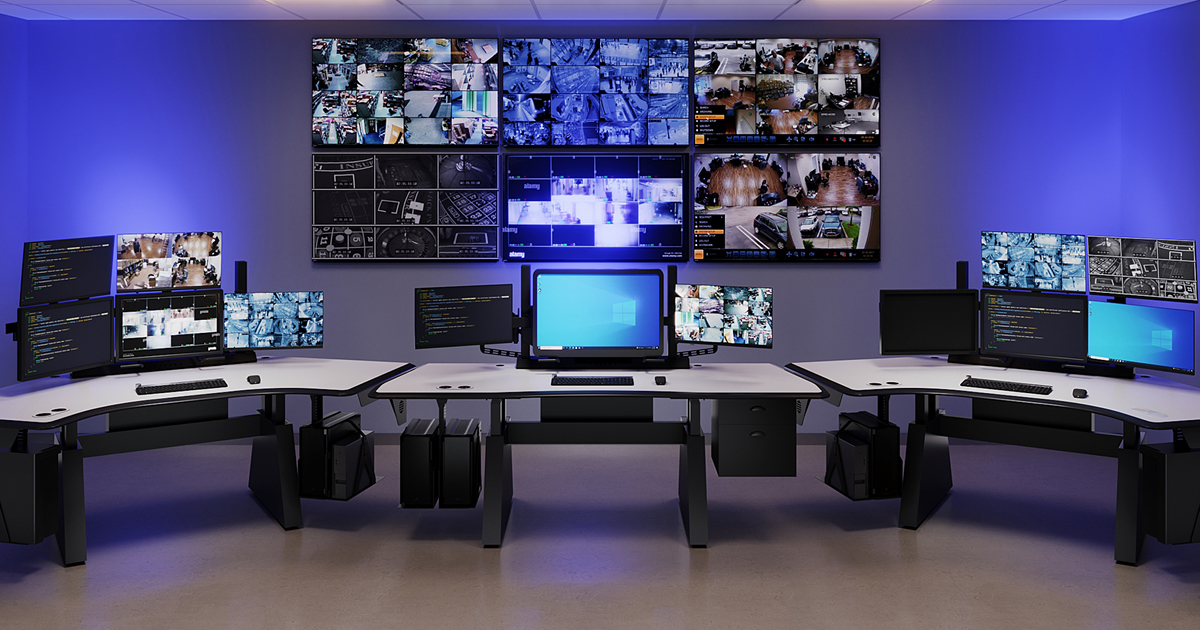
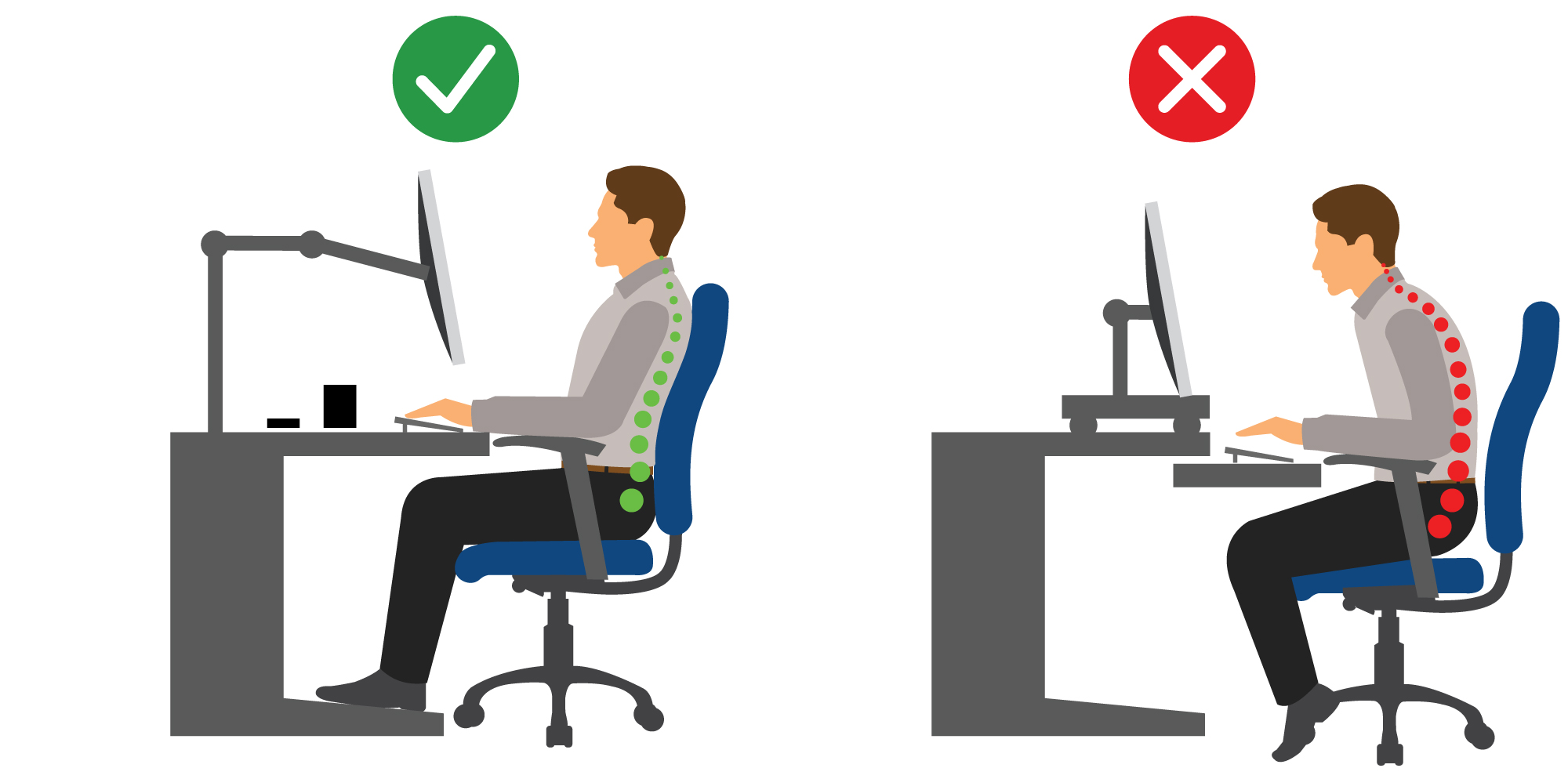
The control room console is the primary interface between operators and the systems they oversee. When designed in alignment with established standards such as ISO 11064, consoles provide neutral posture, consistent reach distances, and stable sight-lines. When advanced ergonomic engineering is applied with the micro adjustability needed, the console can reduce unnecessary strain and preserve cognitive capacity over long shifts.
The control room console is not furniture. It is the cognitive anchor of the SOC.
Advanced ergonomic consoles enable precise micro adjustment of monitor height, depth, and angle, as well as desktop height, ensuring that critical information remains within the optimal visual field. Support for multiple large displays without excessive head and eye movement, or awkwark posture movements, helps maintain situational awareness while minimizing cumulative fatigue. Integrated mounting systems and disciplined cable and equipment management further contribute to a clean, predictable workspace that limits distraction.
Adaptability is equally critical. Consoles that accommodate different operators, task types, and shift patterns support consistent performance across teams. When the physical interface is intuitive and stable, mental resources can be devoted to analysis and judgment rather than compensation. This physical foundation directly influences how information is processed and decisions are made within the SOC.
Information Hierarchy and Display Strategy
Once a sound ergonomic foundation is established, information hierarchy becomes the next defining factor in cognitive workload management. When all data competes equally for attention, operators are forced to interpret priority continuously, increasing mental effort and delaying response.
Effective SOC design establishes a deliberate hierarchy of information. Critical alerts and system states are immediately visible, while contextual and supporting data remains accessible without overwhelming the operator. Display walls, combined with well-configured individual workstations, reinforce a shared operational picture that allows teams to align quickly during both routine operations and escalation events.
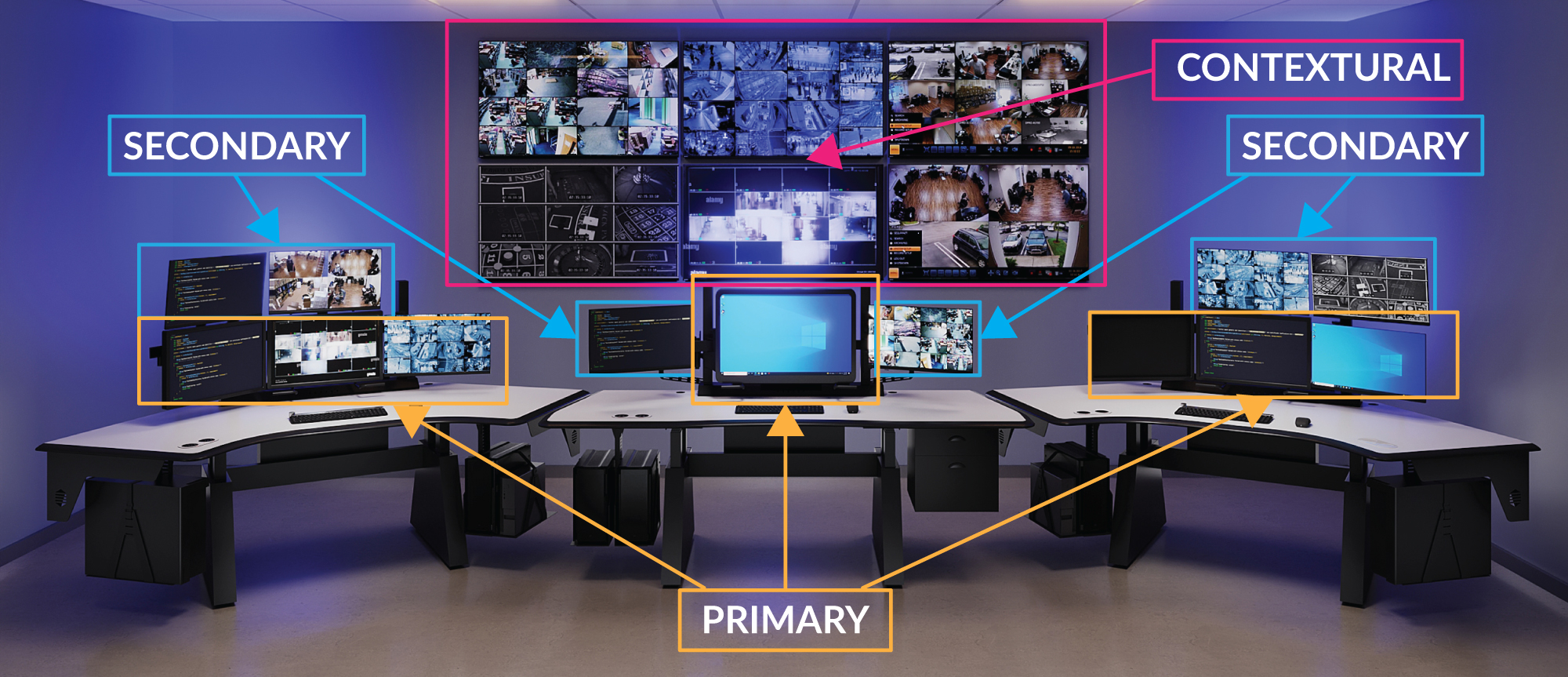
Consistency across displays is essential. Standardized layouts, visual conventions, and logical grouping reduce the mental effort required to reorient when operators rotate positions or collaborate under pressure. This predictability supports faster comprehension, more confident decision-making, and reduced cognitive friction.
When operators must interpret priority instead of acting on it, cognitive load increases and response slows.
Environmental Factors That Shape Cognitive Endurance
Cognitive performance is inseparable from the surrounding environment. Lighting that introduces glare or excessive contrast increases visual strain. Poor acoustics elevate distraction and impede communication. Over long shifts, these environmental stressors quietly erode focus and mental stamina.
SOC environments benefit from lighting strategies that support visual comfort and circadian alignment, particularly for 24/7 operations. Acoustical treatments that reduce ambient noise while preserving speech intelligibility enable operators to maintain concentration without added stress. These environmental controls function as continuous, often invisible contributors to sustained cognitive performance.
Lighting and acoustics quietly shape attention, focus, and mental stamina over time.
Spatial Design and Collaborative Efficiency
SOC operations are collaborative, especially during incidents that require rapid coordination. Spatial design directly influences how efficiently teams share information and align their understanding.
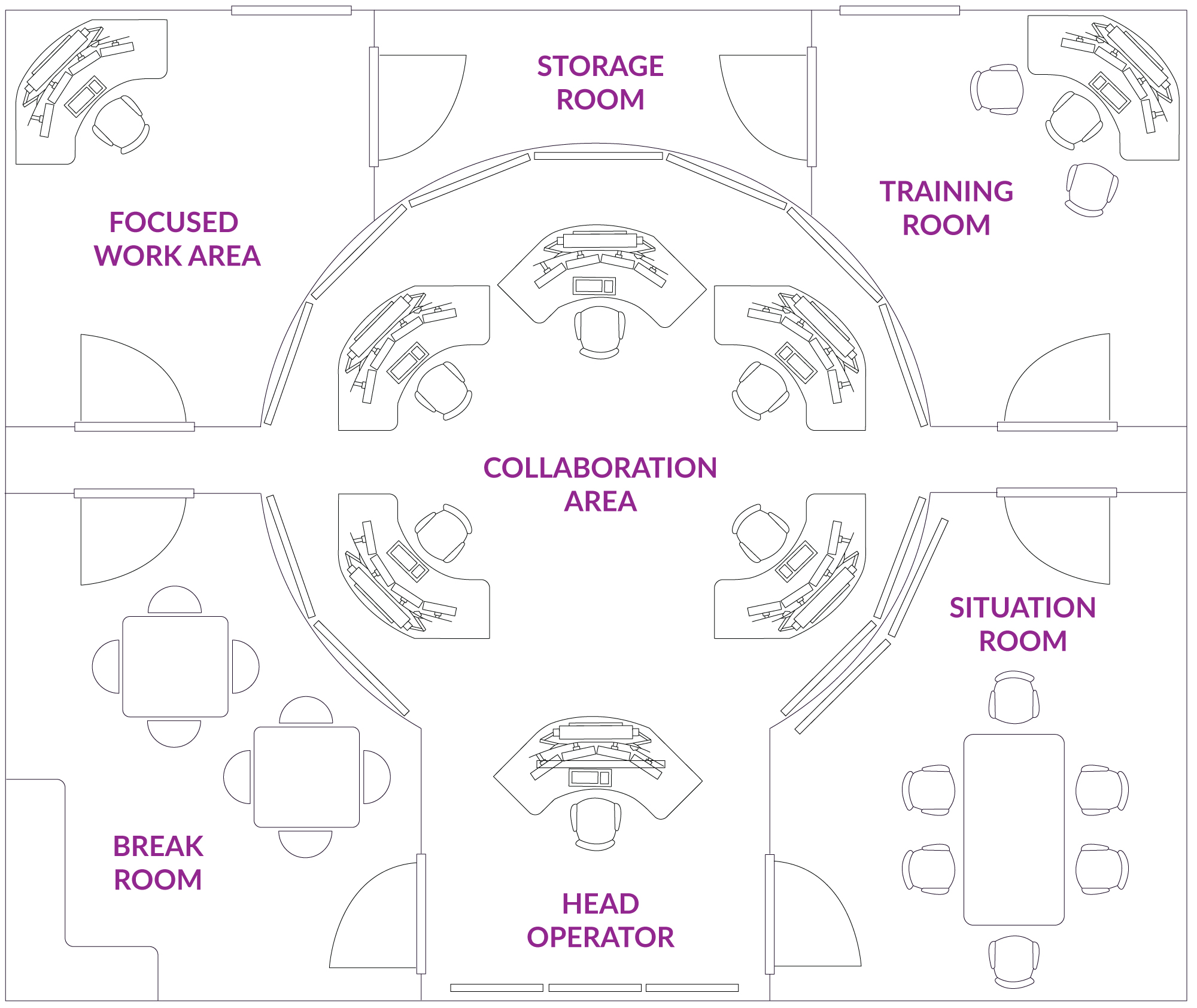
Layouts that support clear sight-lines, intuitive communication pathways, and appropriate separation between focused and collaborative zones reduce the mental effort required to coordinate action. When collaboration is physically supported by the environment, teams respond more cohesively and decisively, even under escalating pressure.
Designing for Endurance Across Shifts and Careers
SOC operators are expected to exhibit high performance not only during peak incidents, but across long shifts and extended careers. Cognitive ergonomics recognizes that endurance is as critical as peak performance.
Designing for endurance means reducing unnecessary mental friction throughout the workday. It means creating environments that help operators remain alert, situationally aware, and mentally resilient hour after hour. Over time, these design decisions contribute to lower burnout, greater consistency, and improved retention. These outcomes are inherent in an ergonomically designed control room and directly affect organizational capability.
Designing for endurance includes:
Custom built ergononomically designed workstations
Space configuration layout design
Ambient & task lighting remediation solutions
Ergonomically engineered seating
Sound remediation solutions
Cognitive Ergonomics as a Strategic Imperative
Integrating cognitive workload optimization into SOC design elevates the control room from an equipment-centered space to a human performance system. When environments are intentionally designed to reduce physical strain with consideration as to how people think, perceive, and collaborate, organizations gain clarity, reliability, and resilience.
Designing for cognitive performance transforms the control room into a human performance system.
As SOC responsibilities expand and threat environments become more complex, the ability of operators to process information effectively becomes a defining operational advantage. Designing control rooms for cognitive performance is not a refinement. It is a strategic imperative.
Wickens, C. D., et al. Engineering Psychology and Human Performance. Pearson Education.
Endsley, M. R. “Situation Awareness and Human Error in Dynamic Systems.” Human Factors.
NASA Human Integration Design Handbook, Cognitive Workload and Display Design.
ISO 11064. Ergonomic Design of Control Centres.
National Institute for Occupational Safety and Health (NIOSH). Workload, Fatigue, and Human Performance.